Whether you have arrived here a few days or weeks or years from my posting, welcome! Today is the final post in The Names readalong. Even if you haven’t read the individual pauses for this book, I think you will find this post insightful. 🙂
We will do a quick recap of what The Names is about. Then, I will talk about overall themes and share some questions for you. Lastly, I will link to the individual posts for each pause.
Let’s begin!
Reading with a Slice of Life: Book # 1

The Names
Florence Knapp
Goodreads
The extraordinary novel that asks: Can a name change the course of a life?
In the wake of a catastrophic storm, Cora sets off with her nine-year-old daughter, Maia, to register the birth of her son. Her husband, Gordon, respected in the community but a controlling presence at home, intends for her to follow a long-standing family tradition and name the baby after him. But when faced with the decision, Cora hesitates….
Spanning thirty-five years, what follows are three alternate and alternating versions of their lives, shaped by Cora’s last-minute choice of name. In richly layered prose, The Names explores the painful ripple effects of domestic abuse, the messy ties of family, and the possibilities for autonomy and healing.
Through a prism of what-ifs, Florence Knapp invites us to consider the “one … precious life” we are given. Full of hope, this is the story of three names, three versions of a life, and the infinite possibilities that a single decision can spark. It is the story of one family and love’s endless capacity to endure, no matter what fate has in store.
The Names – Post-Completion Reflections
From Mothershift, I learned that having a baby is the time of the Great Slowdown. I have felt it acutely with The Names. Now that Serai is awake longer and I have been getting little time to read through the day, this book made me want to savour it and think about each timeline, each passing year. Since Cora’s son was a newborn at the start of the book, I was watching the unfolding of a life from new to older. It was beautiful and mesmerizing. The new experiences we have in life add new dimensions to reading and I haven’t felt this new stage of my life become so pronounced until this book.
The whole idea of three lifetimes is that there are many possibilities. Even if they don’t hinge on the moment a birth certificate was filed, there are many directions life can take. At the same time, a message that The Names drilled into my brain, especially in its closing, was that time can be redemptive, and that character – of any one of us – doesn’t have to be static. We can all change.
In this final post about the book, I want to discuss four aspects of the book and I invite you to reflect alongside me. Share in the comments if you are comfortable. I would love to hear from you!
🎨 1. The Names and The Art of the Chapters
Names—and the act of naming—run through the entire novel. at the start, Cora wondered about the power and legacy of names. How Maia and her are tied together. Who her son will become based on the name he is given. The different lifetimes showcase how the name impacted the characters but their life situations had a lot to do with that too.
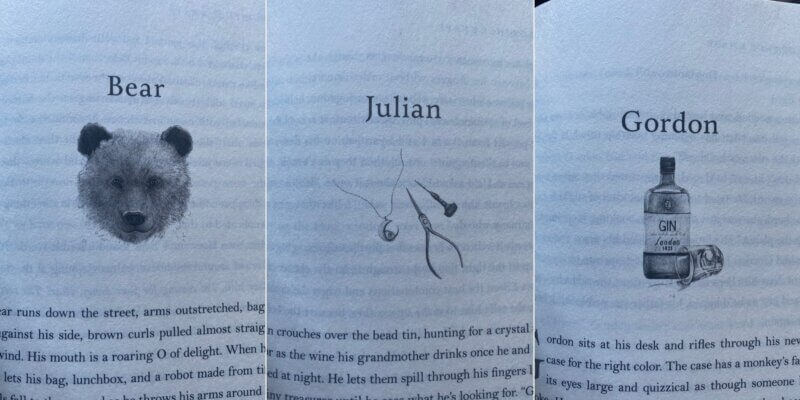
Bear, Julian, and Gordon have their respective chapter arts. Bear’s is the face of a bear, Julian’s is a set of pliers and thread, Gordon’s is a glass of gin of that name. These objects represent the characters very well. Bear is like his animal namesake. He is strong and loveable, kind and a wanderer. Julian js a jeweller and his craft is an important part of his identity. Gordon has an exploitive relationship with alcohol that he eventually has to mend. I love these little mementos chosen to represent the characters and their names.
In my own life, my name holds scared meaning to me. My parents chose it for me. Kriti means creativity and I love how I embody it. My husband’s name is Clinton which means settlement. I believe it embodies him well – he is calm and a sturdy, a calming and grounding presence in my life. Our daughter is named Serai. It is a version of Sara which means princess but I think of it as the eldest child of the eldest children. She is. Both Clinton and I are the oldest children of our parents. In Arabic, her name means the sultan’s palace. She is going to be seat of power and I am enjoying seeing how this unfolds.
Your turn: What does your name mean? Is there a name in your family that says something about the person’s character?
🔀 2. The Choice That Changed Everything
The Names forks into three possibilities from one moment in 1987. On the first day, I shared about my teaching books. I want to take a moment here to reflect on that choice all those years ago.
If I had chosen to become a teacher, what would have followed would surely have been years of surrounded by children, immersed in education and a big social life offered by the school environment. The cost of that may have been stress and most likely still not having my Canadian citizenship.
I don’t know how my personal life would have changed. I had already met Clinton by then and I believe we would have stayed together. My friendships though would have been different. Maybe I wouldn’t have started a book blog at all, knowing that I won’t have time to dedicate to it. Who is to say?
I used to write about teaching and learning during my teaching degree. I am sure I would have tried to keep up with that in some capacity.
Your turn: What’s one decision—small or large—that led you to your current life? What might a “different” version of you look like if you’d chosen the other path?
📆 3. The Timeline as a Character
I wondered why The Names starts in October 1987 and I love what I found.
According to Domestic Violence Services Network, in an article about the Long History of Domestic Violence and the Development of the organization (read here), in the US, the first domestic violence awareness month was observed in October 1987, to mark the establishment of the first national domestic violence hotline.
I love the significance of the starting point of this story. Cora mentions in Bear’s timeline how much help came for her that she didn’t know anything about. In other timelines, going to a refuge centre as a domestic violence victim had mixed results. As years changed, the support changed too.
2015 and 2022 both feature in the book and are memorable years. The Paris attacks in November 2015 and the COVID pandemic in 2019-21 whose effects were felt deep into 2022 affected the characters in their unique ways. The Names highlighted the impact of these events that united the world in sorrow and fear.
Your turn: Of the years in this book, was there one that stood out to you? Did 2015 and 2022 hold a major significance for you?
🌍 4. Why The Names Is Being Translated in 20+ Languages
The Names is published in over twenty languages. As a debut book, what does the story hold that it is deemed worthy to reach so many people and cultures? Let’s have a look.
- The story of a family – something people worldwide can relate to.
Though The Names starts off as being about one decision – the naming of a child – and how it echos in three lifetimes, this act resonates with all of us. We all have a name. At some point in life, we may have even had the honour of bestowing a name on a pet or a child.
Whether it is the early days of caring for a baby, being a homemaker, having a controlling husband, being a sibling looking out for her younger sibling, a grandparent called to care for her grandchildren in the absence of their mother, these are all ways in which anyone’s life story can evolve. That is what makes this story so compelling and relatable! Everyone has wondered: What if things had gone differently? Here is a tale that shows three ways it could have transpired.
The Names covers emotions that transcend cultural borders. Just think about Cora’s quiet suffering, Maia’s identity struggles, Julian’s struggles as a self-employed jeweler during the pandemic. The book doesn’t rely on national politics or niche cultural references; it’s built on family dynamics, choices, trauma, and hope, again making it relatable.
Many readers around the world are drawn to stories of family lineage, of how trauma and resilience ripple forward. Themes like immigration, abuse, gender identity, and motherhood are relevant across the globe. Ariel and I love discussing books with these qualities.
2. Sometimes this felt like watching a movie through an immersive writing style.
The three-timeline structure gives the novel a speculative, almost cinematic quality. The themes of motherhood, identity and growing up are presented in snapshots, engaging the reader’s imagination.
I found so many quotes and I found myself intentionally pausing to think after each year. I have never been called to stand still by a story so many times. It’s a rare combination: deeply thoughtful, yet easy to follow. I hope that translators can honor both tone and pace.
You can find all my thoughts linked below. I will definitely be revisiting them when I reread this book.
Series Index:
- Pause 1: Pages 1-44
- Pause 2: Pages 45-88
- Pause 3: Pages 89-134
- Pause 4: Pages 135-186
- Pause 5: Pages 187-248
- Pause 6: Pages 249-316 (end)
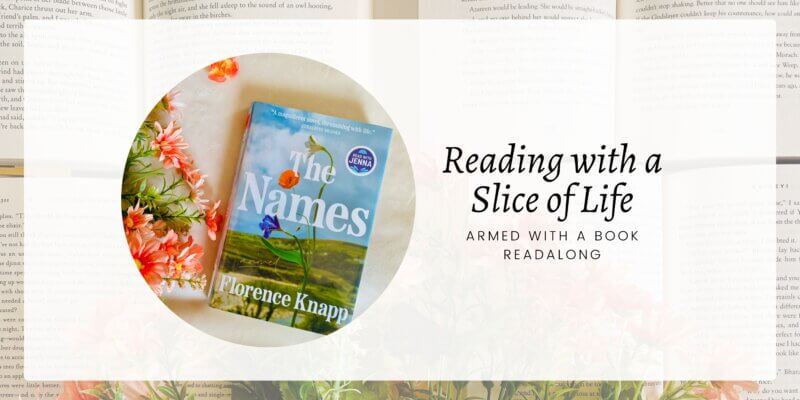
Reading is not separate from life. Weaving together what’s happening on the page with what’s unfolding in my own life was a great way to slow down and savour both. It has been a pleasure to share the very first iteration of Reading with a Slice of Life! I hope you enjoyed a glimpse into the true reading experience of this amazing book.
See you at the next iteration of the series! 😀

Excellent analysis. I adored this book!