Welcome, friend! Today I am chatting with author, Fran Kimmel, about her book, Cattail Lane which I gushed about in yesterday’s post. Enjoy the interview and let me know in the comments if you will be reading the book!
Cattail Lane
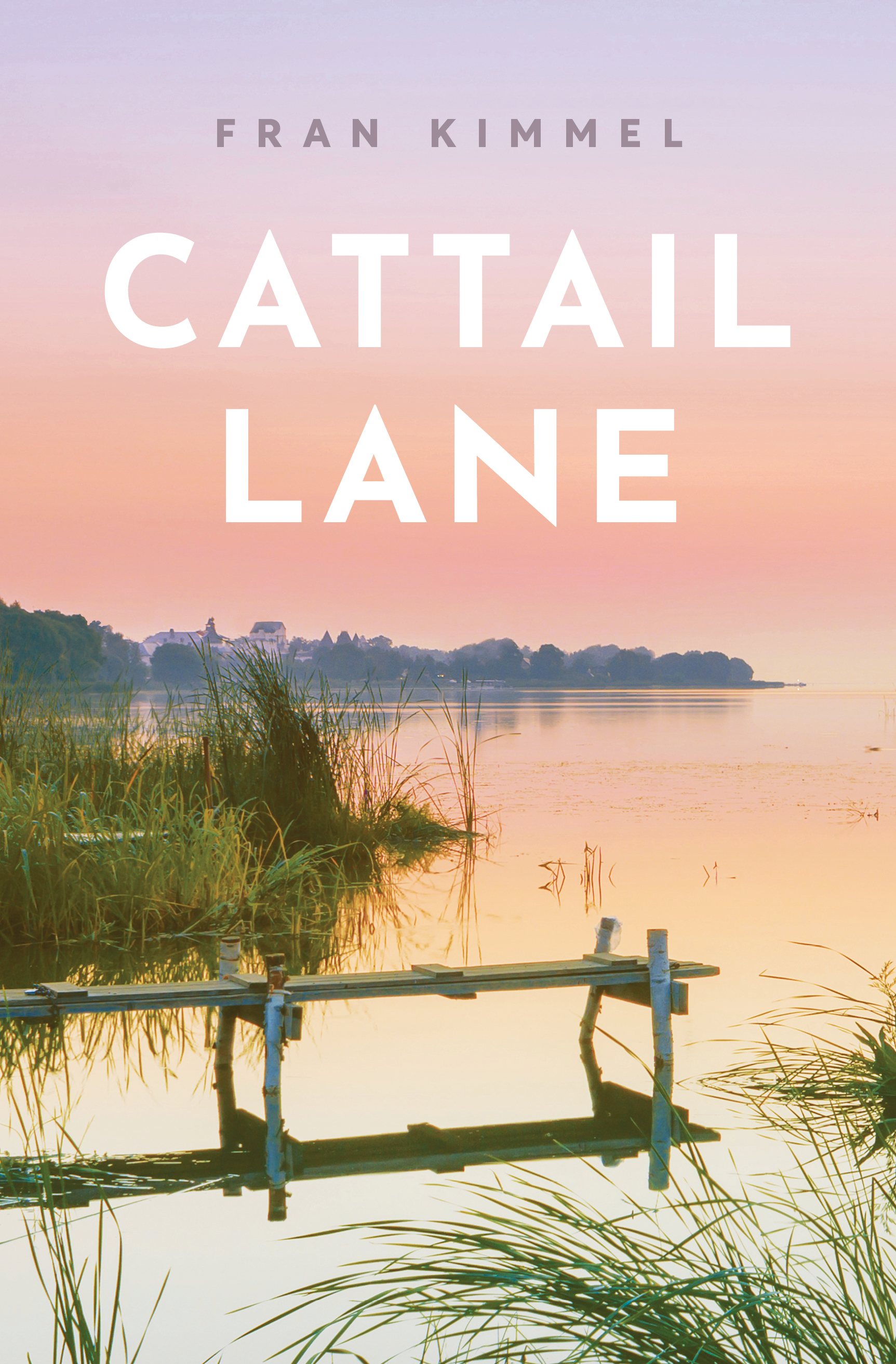
Nick Ackerman’s life is an aimless circuit between his uninspiring job and the local bar until a note from a stranger changes everything. He learns he has a 14-year-old son, Billy, whose grandmother can no longer look after him. Railroaded into fatherhood, Nick takes in the resentful Billy and shuffles Grandma Evie off to the nearby dementia ward at Prairie View Manor. Things get off to a rocky start: father and son are little more than strangers, and Nick struggles with his new caretaking role while Billy can’t seem to let go of his. Luckily, there is Sarah, a housekeeper in the dementia ward and the single mother of an energetic and offbeat five-year-old. It is Sarah who Nick turns to as a parental role model and maybe something more.
Nick, Sarah, and Billy all carry their own betrayals and disappointments and are used to keeping others at a distance, but during the dog days of summer, they are given a chance to leave past hurts behind and find a new kind of family.
Compassionate and closely observed, Cattail Lane is a moving exploration of forgiveness, second chances, and the everyday moments where we might find our way to one another.
Get to know the author: Fran Kimmel
Hi Fran! Welcome to Armed with a Book. To start us off, can you introduce yourself to our readers?

I’m so delighted to be here! I write short stories and plays, and Cattail Lane is my third novel. My husband and I live in Lacombe, a beautiful small town in central Alberta. Alongside my own writing, I teach a number of classes, but I’m especially proud of Brave New Writing, now in its fourth year, where we gather to chat, laugh, write, and share. I love camping, wandering the woods, and, most recently, I’ve been taking baby steps with water colours. My cherries often look like crabapples, and my trees end up crooked, but I’m having fun trying.
What first sparked the idea for Cattail Lane?
Cattail Lane was inspired by some deeply personal experiences, particularly my time spent on a
memory care unit, where my mother lived for five years. Those years brought a mix of
emotions — joy, heartache, and an unexpected sense of community. I wanted to reflect this depth of connection in Cattail Lane — in the characters’ struggles and in their moments of unexpected joy.
Nick begins the story living a pretty aimless life until he learns he has a son. How did you approach writing his transformation into fatherhood?
I didn’t want Nick’s journey to feel sudden or tidy. Stepping into parenthood is often layered with hesitation and self-doubt. For Nick, the challenge is even greater because instead of a baby, he’s handed a 14-year-old boy who wants nothing to do with him. Nick is flawed, uncertain, and stumbling, but at his core he wants to do right by Billy. I tried to write his transformation as a slow burn, where love reveals itself in small, imperfect steps rather than one grand moment.
Billy’s mural project at the dementia ward is one of the most moving parts of the story. Where did the inspiration for this come from?
My town of Lacombe Is covered in wonderful historical murals, so the idea felt close to home.
Plus, I saw firsthand how murals and colour completely transformed the atmosphere of my mom’s memory care unit, bringing warmth to a stark space. I wanted Billy to give that same gift—not just to the residents, but to himself.
Evie’s presence in the novel is tender and heartbreaking. How did you capture the experience of dementia with such compassion and realism?
Evie was close to my heart. Having spent time with lots of folks with dementia, I’ve seen how people change, but also how they remain themselves in flashes of humour or tenderness. I tried to write Evie not as a “case,” but as a whole person with a long history and relationships that mattered. We may not always understand what’s going on in the mind of someone with dementia, but we can still see their dignity and their humanity.
Sarah is such a “sunshine” character, balancing her own struggles with so much encouragement for others. Was she inspired by anyone you’ve known?
Sarah is a mix of many of the incredible women I know. Like so many others, she reminds me that optimism doesn’t mean ignoring struggle; it’s more about choosing generosity despite it.
The book highlights how children can connect us back to our own parents. Did becoming a parent yourself influence this perspective?
Absolutely. When my kids were little, I often caught myself echoing my own parents—sometimes without even realizing it. I’d hand out orange juice popsicles or celery sticks with Cheese Whiz and raisins, just like my mom did, and I’d hear myself giving the same pep talks: try your best, you can do anything, or my dad’s quirky favourite, keep your chin up or the birds will use it for target practice. Parenthood has a way of circling us back to our roots, whether we mean to or not.
How do you balance hope and heartbreak when you’re writing about difficult subjects like grief, aging, and estranged families?
For me, hope and heartbreak are inseparable. If we didn’t love deeply, grief wouldn’t cut so sharply. I try to write in a way that acknowledges the pain while also leaving space for healing and kindness. That balance feels close to how real life works.
How did writing Cattail Lane compare to your earlier novels (No Good Asking, The Shore Girl)?
By this third novel, I thought writing might get easier—but it hasn’t. I start with an outline, though my process is still messy and unpredictable. Structurally, Cattail Lane is more straightforward, but emotionally it cuts closer to home, especially with the dementia storyline.
Do you have a favourite quote or scene that you find yourself going back to?
I think my favourite scene is when Nick is teaching Billy how to build a fire. It’s a small, simple moment, but it carries so much weight because it’s the first time they’re truly bonding as father and son. For me, it marks the spark of trust and connection between them, something they’ll keep building throughout the story.
What’s something you hope readers feel when they close the book on Cattail Lane?
It’s my biggest wish that readers will feel something real and relatable in these characters. Life is messy, and families are complicated, but there’s beauty in people stumbling their way toward one another. If readers walk away with a little more tenderness for themselves and others, I’ll be happy.
You’ve worked so many jobs—youth worker, career counselor, diplomat of sorts in consulting—do pieces of these experiences sneak into your fiction?
All the time. Each role gave me windows into people’s lives at vulnerable or transitional moments. People losing their jobs. Kids losing a parent. Those experiences helped me see how resilient we can be, and how much we all long to be understood. That curiosity is what keeps me writing.
If you could paint a mural like Billy’s in real life, what would it look like and where would you want it to be?
My mural would be an explosion of cattails too. I’m obsessed with them. It would be fun to transform the walls of my writing classroom into a cattail marsh with all that rustling energy and hidden life surrounding us. A frog or two could be peeking out to cheer us on while we write.
Is there anything else you would like to add?
Just my gratitude to you and readers who spend time with my books. Stories only come alive when they’re shared, and I feel so blessed each time someone chooses to enter the world of my characters.
Thanks for joining us! Add this book on Goodreads. It is available wherever books are sold! You can find my review here.
Connect with Fran on her website.

Be First to Comment