
Welcome, friend! Ariel and I read T. Kingfisher’s latest, Snake-Eater. Not a traditional horror, but a cozy, character-driven tale with suspenseful edges, Snake-Eater is a delight to return to day after day. It is with utmost thrill that we share this interview with T.!! I am awestruck to host a renown author. T. Kingfisher writes fantasy, horror, and occasional oddities, including Nettle & Bone, What Moves the Dead, Thornhedge, A House with Good Bones, and A Sorceress Comes to Call. Let’s get started.
Get to know the author: T. Kingfisher
Hi T.! To start us off, could you tell my readers a little about yourself and your writing journey?
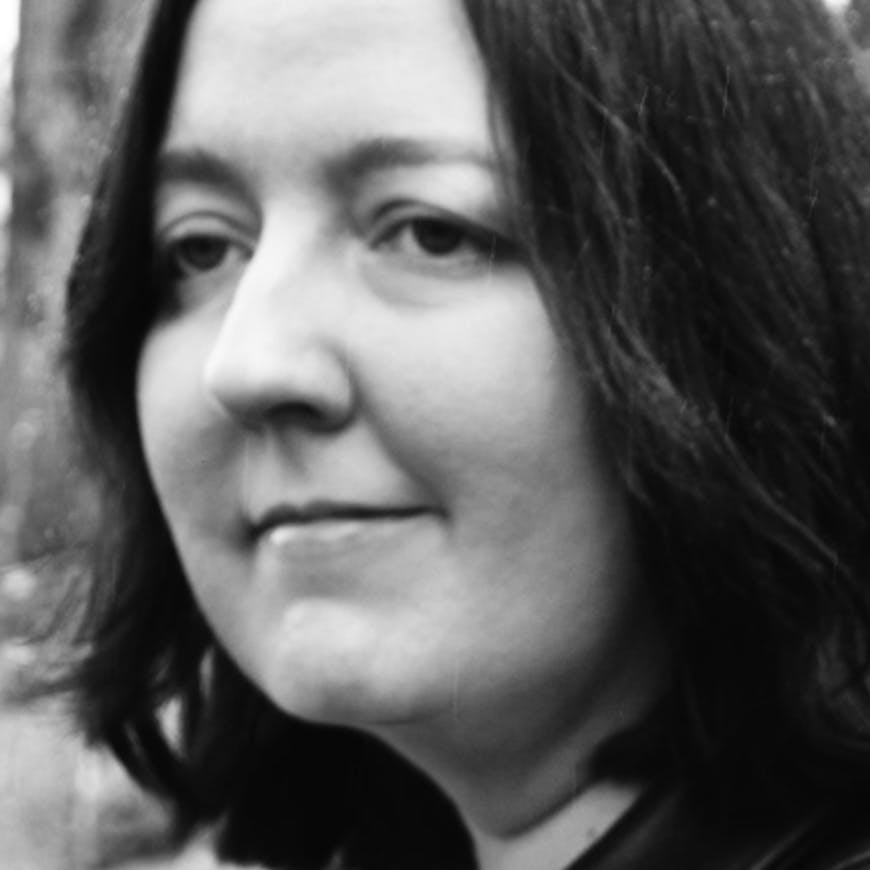
I always wanted to be a writer, ever since I got through the last of the talking animal books in the school library and discovered that there weren’t any more. Clearly, I thought, I would have to write them myself. Eventually in college I decided there was no money in writing and became an artist instead. (I did not make good life choices in college.) I started doing comics, which got me writing again, went to children’s books, and eventually wrapped all the way back around to writing novels. These days, I live in New Mexico with my husband and assorted pets. I garden and play video games when I’m not writing books.
You’re prolific across fantasy, horror, fairy tales, romance, children’s books—what’s the joy (and challenge!) of writing in so many genres?
I have ADHD so bad that squirrels go, “Whoa. That lady is easily distracted.” So I frequently will find myself in mid-novel and get an idea for something in a totally different genre. If I had to stick to just one, I’d be trying to shoehorn a horror novel into a romance or something like that. (Though as it is, I am told that most romances do not feature quite so many severed heads…) I’ve been very fortunate that my publishers have been okay with the genre hopping and that my readers will mostly follow me anywhere (although some of them can’t do horror, and that’s fine. Horror is very individual!)
What three words would you use to describe Selena?
Wounded and anxious, but also funny. She’s very beaten down but also has a strong sense of the absurd.
What three words would you use to describe Snake-Eater?
Powerful, entitled and inhuman. He’s not evil per se, he just doesn’t have a human sense of morality at all.
Selena’s dog, Copper, is such a delightful character. Was Copper inspired by any of your own pets?
I had a black Lab growing up, and my current dog is an elderly, amiable hound in much the same mold.
You’ve written about creepy houses before, but this one comes with gods and spirits in the backyard. What makes deserts such rich settings for you?
I spent some formative years of my childhood in Arizona and southern California, and I’ve always loved deserts as a result. But they’re sadly underused as settings, I think. They have this wonderful austere beauty and they reward close observation. You find tiny plants tucked into cracks in the rocks, flowers smaller than your fingernail, cactus the size of walnuts. If you don’t look closely, you can miss all the life and just find them barren.
Roadrunners show up in your bio and here in the desert. What’s the most surprising or funny fact you’ve learned about them?
Everybody outside the Southwest looks blank when you talk about roadrunners, and says, “What, like the cartoon?” Everyone in the Southwest, though, will immediately start in with, “Let me tell you a horrible thing I saw a roadrunner do!” They are voracious predators. Snakes, lizards, other birds, any mammal smaller than they are, you name it. And they have no fear of humans because they know they’re so much faster than we are.
I was driving through a suburban neighborhood in Alburquerque not long ago, and a roadrunner used the crosswalk in front of me. I stopped for him, obviously. He had the right of way, after all.
The mythology of “small gods” and “old gods” in Snake-Eater feels layered. What traditions, stories, or folklore inspired you?
Oh goodness. There’s just so many traditions with household gods and spirits, and with spirits of place, that it’s hard to point to just one. Those formative years in Arizona included a lot of kachina imagery—I used to spend hours poring over Barton Wright and Clifford Bahnimptewa’s Kachinas: A Hopi Artist’s Documentary. And my grandmother was a sort of folk Catholic, which helped inspired many of the elements in the book too—you have a saint to invoke for pretty much everything.
I was a Classics minor, to round out my completely unmarketable college skillset, and the genius loci was a big thing in the ancient world: the spirit of a particular place, whether it was a rock or a village or even just your house. If you’re the god of Athens, say, you’re probably pretty impressive, but if you’re the god of the fourth pine tree on the left, you’re probably very small. And the tutelary spirit who overlooks something big and important, is likewise big and important—I think nearly every culture on earth has or had some version of harvest spirits, whether it’s barley kings and corn gods or the gods of cattle or deer or fish, that must be appeased for a successful harvest or a successful hunt. Which is all well and good if you’re, say, Centeotl, the Aztec god of maize, or Axomamma, the Incan goddess of potatoes, but what if you’re the patron god of whiptail lizards in the middle of nowhere? You probably care very much about them, and you may well be millions of years old as these things go, but you’re still very small.
If you could have dinner with one of your gods from Snake-Eater, who would it be (and what’s on the menu)?
Oh, definitely Raven. Raven shows up in stories around the globe—he steals the sun in indigenous Pacific Northwest myth, he’s a trickster and sometimes a con artist, but he also creates the world; he perches on the shoulders of Odin, who is likewise a trickster and con artist; in Icelandic epics, the first explorer takes three ravens with him and one leads him to Iceland.
He’s undoubtedly the best conversationalist of the bunch, but I’d still keep an eye on my valuables.
For someone who enjoyed Snake-Eater, what would you suggest they pick up next from your backlist?
If you like scary stories about a woman alone in a house with her dog, that’s The Twisted Ones. But if you want a fun fantasy romp with lots of quirky minor characters and another long-suffering priest, Swordheart fits the bill, and even has romance to boot.
Do you have a favorite book that is set in the desert like Snake-Eater?
The Wood Wife by Terri Windling is an absolute gem. Still one of my all-time favorite books.
Is there anything else you’d like to share before we let you get back to writing (or wrangling chickens)?
Deserts are one of the most endangered landscapes on earth, mostly due to development—urban sprawl in Arizona has chewed massive holes in the Sonoran desert, for example. Unfortunately, deserts are also incredibly fragile, which you might not think to look at them. Many of the plants are very slow-growing and once they’ve been disturbed, even if they’re protected, it can take centuries to grow back. In America, at least, people get very passionate about protecting forests, but we frequently ignore drylands, or assume they’re only good for grazing cattle (or god forbid, plant a lawn.) If you live in or happen to visit the American Southwest, it’s absolutely worth going to the various botanical gardens or the desert museums to get a look at all the small, wonderful things that you’d miss if you don’t regularly spend hours wandering around with your nose six inches from the ground.
Thank you so much for joining me on Armed with A Book—it’s been a treat to chat with you and introduce Snake-Eater to my readers!
Here are some details about Snake-Eater:
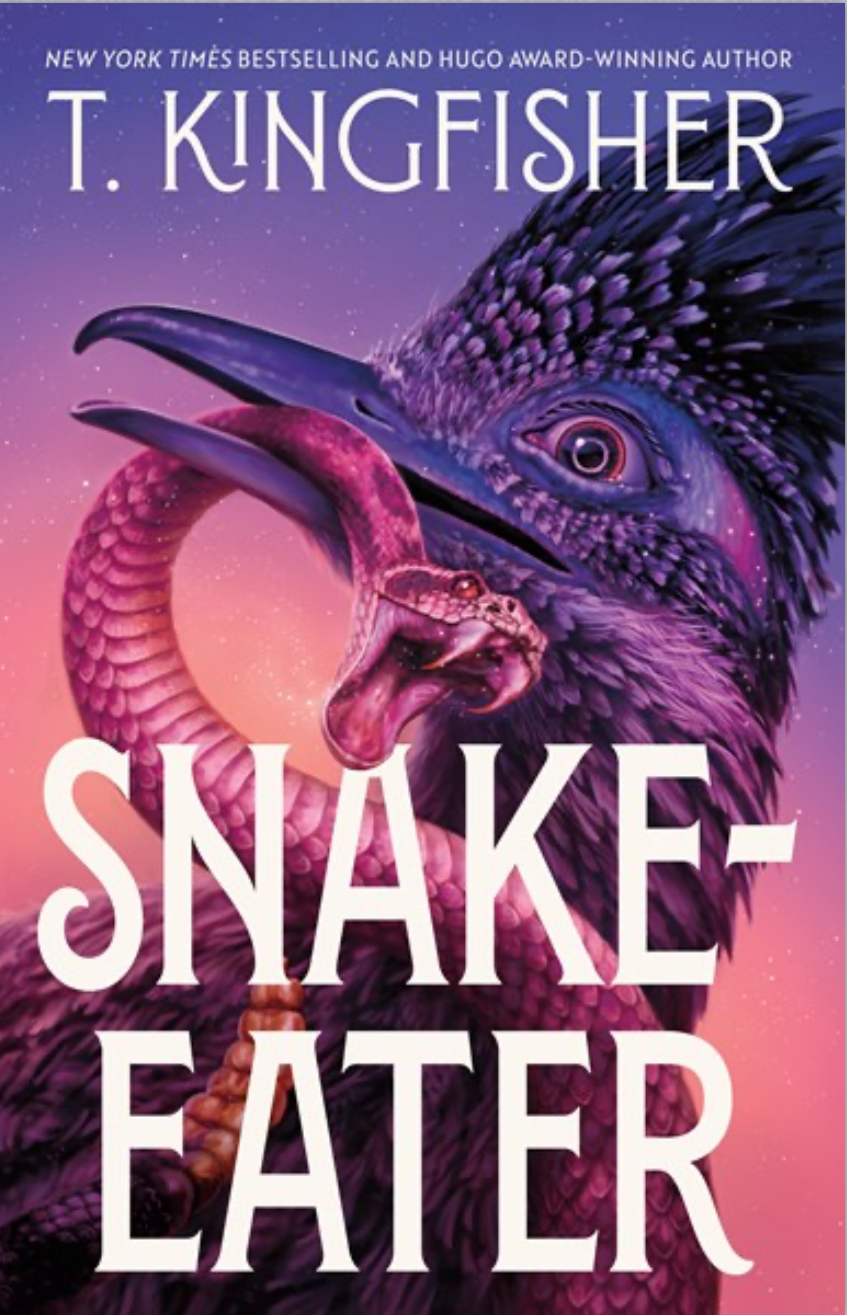
In an isolated desert town, a young woman seeking a fresh start is confronted by ancient gods, malevolent supernatural forces, and eccentric neighbours. A witty horror-tinged fantasy, perfect for fans of Silvia Moreno-Garcia, Chuck Tingle, and Rachel Harrison.
When Selena travels to the remote desert town of Quartz Creek in search of her estranged Aunt Amelia, she is desperate and short of options. Fleeing an unhappy marriage, she has exactly twenty-seven dollars to her name, and her only friend in the world is her dog, Copper.
On arrival, Selena learns Amelia is dead. But the inhabitants of Quartz Creek are only too happy to have a new resident. Out of money and ideas, Selena sees no harm staying in her aunt’s lovely house for a few weeks, tending to her garden and enjoying the strange, desolate beauty of the desert. The people are odd, but friendly, and eager to help Selena settle into her new home.
But Quartz Creek’s inhabitants share their town with others, old gods and spirits whose claim to the land long predates their human neighbours. Selena finds herself pursued by disturbing apparitions, visitations that come in the night and seem to want something from her.
Aunt Amelia owed a debt. Now her god has come to collect.
Many thanks to Over the River PR for having Ariel and I on tour for this book and the chance to talk to T. Kingfisher! Read our book discussion here and check out all stops here.
Thank you for joining us!

Great interview!