Welcome, friend! I am back today to chat with author, John A. McDermott, about his debut novel, The Last Spirits of Manhattan, that I raved about in my previous post. Enjoy the interview and let me know in the comments if you will be reading the book!
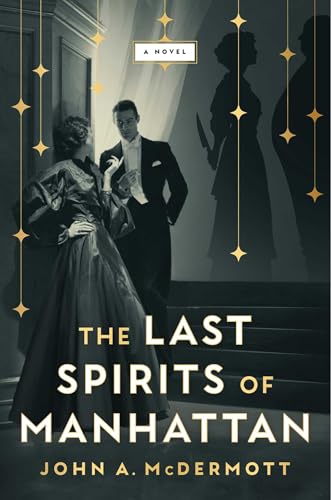
The Last Spirits of Manhattan
John A. McDermott | Goodreads
Based on a true story, this sparkling and witty novel whisks you to 1956 Manhattan, where famed director Alfred Hitchcock is hosting a star-studded party in an allegedly haunted house…only for the soiree to be interrupted by a ghostly party crasher.
After fleeing her mundane life in the Midwest, Carolyn Banks finds herself in her enigmatic great-aunts’ eerie mansion on Manhattan’s Upper East Side. Inside its crumbling façade, suspense director Alfred Hitchcock is throwing a party, gleefully informing his celebrity guests that the venue is supposedly haunted. It all seems like a fun gag, but Carolyn knows that the line between reality and the supernatural is dangerously blurred here.
Soon, the paranormal entities are mingling with guests like Charles Addams and Henry Fonda. As Carolyn grapples with romantic entanglements and ghostly encounters, she discovers long-buried family secrets, challenging her understanding of love, loyalty, and legacy. A striking mix of the haunting and the heartwarming, The Last Spirits of Manhattan is an unputdownable novel about a family reunion unlike any other, set against the bewitching backdrop of 1950s New York City.
Get to know the author: John A. McDermott
Hi John! It’s a pleasure to have you on Armed with A Book. To begin, can you tell my readers a little about yourself?
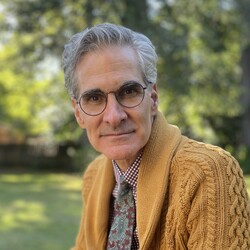
Hi, Kriti! I always start with my hometown (Madison, Wisconsin), and then tell people I teach creative writing at a university in Nacogdoches, Texas, but I think I’ll expand it for you—I’m the youngest child of a big family and even as an adult, I’m still spoiled and dramatic, but only in a good way by this point. At least, I hope my siblings would say that. I’ve also been married for a long time and I hope my wife would say the same.
The Last Spirits of Manhattan is based on a true story. What was it like for you personally to explore this side of your own family history?
My mother told me years ago that Alfred Hitchcock rented her great aunts’ house on the Upper East Side of Manhattan for a haunted party back in the 1950s. It took me a long time to figure out how to make that work in a novel. When I decided to stick ghosts into the plot, most of them based on long-ago relatives, it meant researching not just family lore, but old newspapers and the era. That was really fun. I’m not sure any of those staid old New Yorkers would have wanted to end up in a modern novel, but I tried to be respectful and still tell a good story.
Research is such a huge part of writing historical fiction. What was the most surprising or delightful thing you uncovered about Alfred Hitchcock or 1950s Manhattan?
Hitchcock’s close relationship to his wife, Alma, was among my favorite discoveries. They were clearly best friends, and she was his creative partner—and she was also at the party. Writing her was a delight. Finding out that Charles Addams, the artist who created the Addams Family, was also a friend of Hitch’s (and a guest at the party) was also a surprise. All three of those people had big personalities, so imagining their dialogue was like improvising a song and trying to hit the right notes.
Were there any Hitchcock films you revisited while writing, either for inspiration or research?
The claustrophobia of Rear Window influenced space in my novel (most of my book takes place in one house—though not as cramped as Jimmy Stewart’s apartment!) and Grace Kelly could have been at the party (she really lived a block from the old aunts’ house), but she was off getting ready to marry a prince. She’s definitely an absent-presence in my book. (A sort of not-ghost?) Hitchcock was working on The Wrong Man at the time of the party; Henry Fonda was the lead in that film and also at the soiree. The tragic vibe of that movie had an effect of my story. And there is always Rebecca. I don’t think you can write a haunted house novel with Hitchcock in it and not think of his adaptation of Daphne du Maurier’s brilliant novel.
If you could step into Hitchcock’s haunted party yourself, which guest (real or ghostly) would you most want to talk to?
I guess it’s predictable to say Hitchcock; five minutes with him really would have been interesting, but I’d really want to chat with the old aunts who owned the house. My mother met them when she was little and they were very old and said they were an intense mix of stern and funny. They both lived to be quite elderly. What they could tell you about life in New York in the late 19th and early 20th century! I’ve always liked talking to older people and getting their stories. Writing this novel felt like an extension of that habit.
The novel has chapters from the perspective of waiters, watching a play unfolding from the sidelines. Why did you choose that format, and what did it add to the storytelling?
I wanted a different angle on the party and writing it as a script felt true to the actor-waiter (I didn’t know he was going to be so important, but he just kept showing up!). The waiters have no power at the party, but telling the story his way changes that dynamic. I’ve always loved books with strange interruptions. Maria Semple’s Where’d You Go, Bernadette, with all its different formats, stuck with me for years after I first read it. Thinking back, there’s a play section in James Joyce’s Ulyssses and I’ve loved that weirdness since grad school. Whenever a novel messes with the source of the information, I’m enthusiastic.
Which character surprised you the most as you were writing the book?
My first ghost is a girl named Snug who died in the influenza of 1919, and she’s really my leading (dead) player. Sometimes she’s sad, sometimes she’s mad, and sometimes she’s a little giddy. I’d throw her in a scene and I was never quite sure what her response was going to be—but that felt right. This party could go off the rails at any moment and it’s largely because of Snug.
What was your favorite scene to write?
I’d have to say an ensemble scene toward the end of the party when all my players are in the same room at the same time. It was really challenging to juggle them, but I wanted that sense of things maybe spiralling out of control at any second. I love ensemble casts when they all appear at once. I knew I wanted that energy from the start, but I had to lead them there!
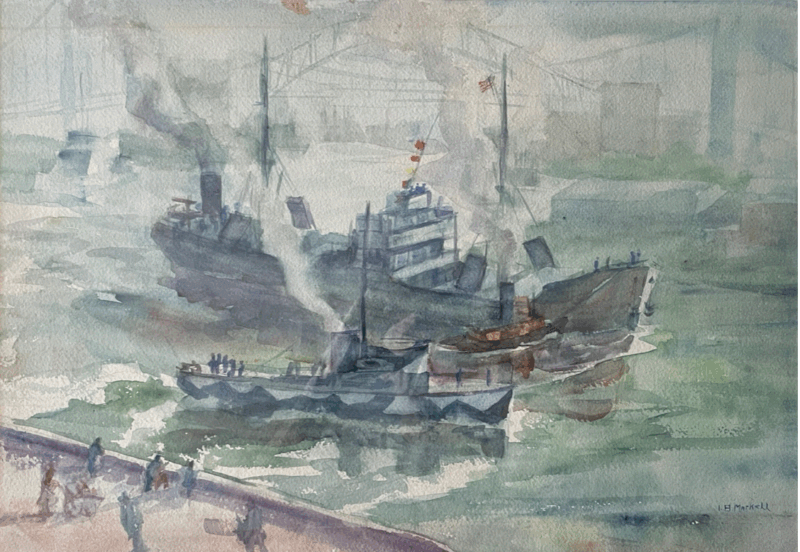
Isabella Banks Markell was an artist and your family. Do you have a favorite painting by her?
Although her subjects ranged from portraits to cityscapes and even circus scenes, she’s primarily known for her numerous paintings of the East River. She lived at 10 Gracie Square overlooking the water and documented life on the river. I’m fortunate to own one of her watercolors and it hangs above a desk in our living room. I look at it every day.
If you could haunt one building—past or present—what would it be, and why?
What a great question! I teach in a classroom here on campus that’s dedicated to creative writing, so all of our workshop classes are held in the same space. I’ve spent more time in that room than most places in my life and I do love those lively conversations. But haunting work sounds like…work? I know a better place! The Memorial Library at the campus of the University of Wisconsin-Madison. It’s where I did my undergraduate degree and I loved roaming the stacks and finding new things to read. I would be a happy ghost if I could haunt a big old library. (Cue Tori Amos’ song “Happy Phantom” here!).
Do you believe in ghosts?
I’m not entirely sold on ghosts that look like our living selves (although the ghosts in my book do look like they did when they were alive), but I do believe in left-over energy. The house we live in now was known for its social life with the family that built the place long before we bought it. On quiet nights with just my wife and daughter, I swear I can feel the energy of all those people visiting from decades ago. Maybe even their conversations burbling around the halls. It’s postive energy.
If readers enjoy The Last Spirits of Manhattan, what other books or films would you recommend they check out?
Noel Coward’s Blithe Spirit is one of my favorite ghost stories, and I love Alice Hoffman’s magical realism. Ghosts are all over Dickens, of course, and I love a good pseudo-Victorian haunting by a modern author (like John Harwood’s The Séance). For historical fiction, I recommend Amor Towles’ The Rules of Civility and for a great family ensemble, I’d say The Nest by Cynthia D’Aprix Sweeney. For history, mystery, and New York City, there’s any novel by Fiona Davis. She’s fantastic.
Finally, what’s next for you? Do you see yourself returning to ghostly historical fiction, or are you tempted to explore something completely different?
My next manuscript-in-progress is another story loosely based on family history. It’s set in July of 1932 on the North Shore of Long Island at a Gatsby-esque party thrown by Marshall Field III. And yes, there are ghosts!
Is there anything else you would like to add?
Just thank you so much for your fabulous questions—and thank you to all the readers out there! Before I was a writer, I was (and am) a great fan of fiction. I hope my novel can entertain and delight some reader the way I’ve been enthralled by others’ books. I write books because I love reading. I’m so thrilled when I find other readers, too.
Thank you so much for spending time with me and letting readers peek behind the curtain of your creative world.
Thanks for joining us! Add this book on Goodreads. It is available wherever books are sold! You can find my review here.
Many thanks to the publisher for coordinating this interview.

Be First to Comment