
Welcome, friend! I am so excited to bring you this conversation with Juliette Fay, author of The Harvey Girls that I shared about in my last post. This is a story about two women navigating a complex, imperfect world in 1920s US and how friendships can sustain us when we are lonely and help us blossom when we are ready. Let’s welcome Juliette and learn about the book.
Get to know the author: Juliette Fay
Hi Juliette! Welcome to Armed with a Book. To start us off, can you introduce yourself to our readers?
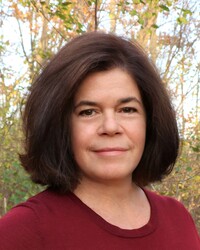
Hello! I’m Juliette, and I’ve been in love with books since I learned to read. I’ve also been a writer since then, as evidenced by “Watermelon for Alfred,” a picture book recently exhumed during an attic clean out. Alfred has a seed problem, and it’s high drama until his mother helps him learn how to spit them.
What drew you to the world of the Harvey Girls and the 1920s Southwest as the backdrop for your latest novel?
I waitressed through most of my twenties, and in college I had an elaborate fantasy about waiting tables at a national park out West for the summer. The restaurant in my daydream was always called The Wooly Mammoth, and I would still tie on an apron if I could find that magical place.
I never went. It was before the internet, and I didn’t have a clue as to how to make it happen. I worked at the local pizza place in my hometown instead. It was fun, but it was no Wooly Mammoth.
When I learned about the Harvey Girls, it was clear that my fantasy had actually been real, but I had been born too late to be part of it. I would have joined up in a heartbeat.
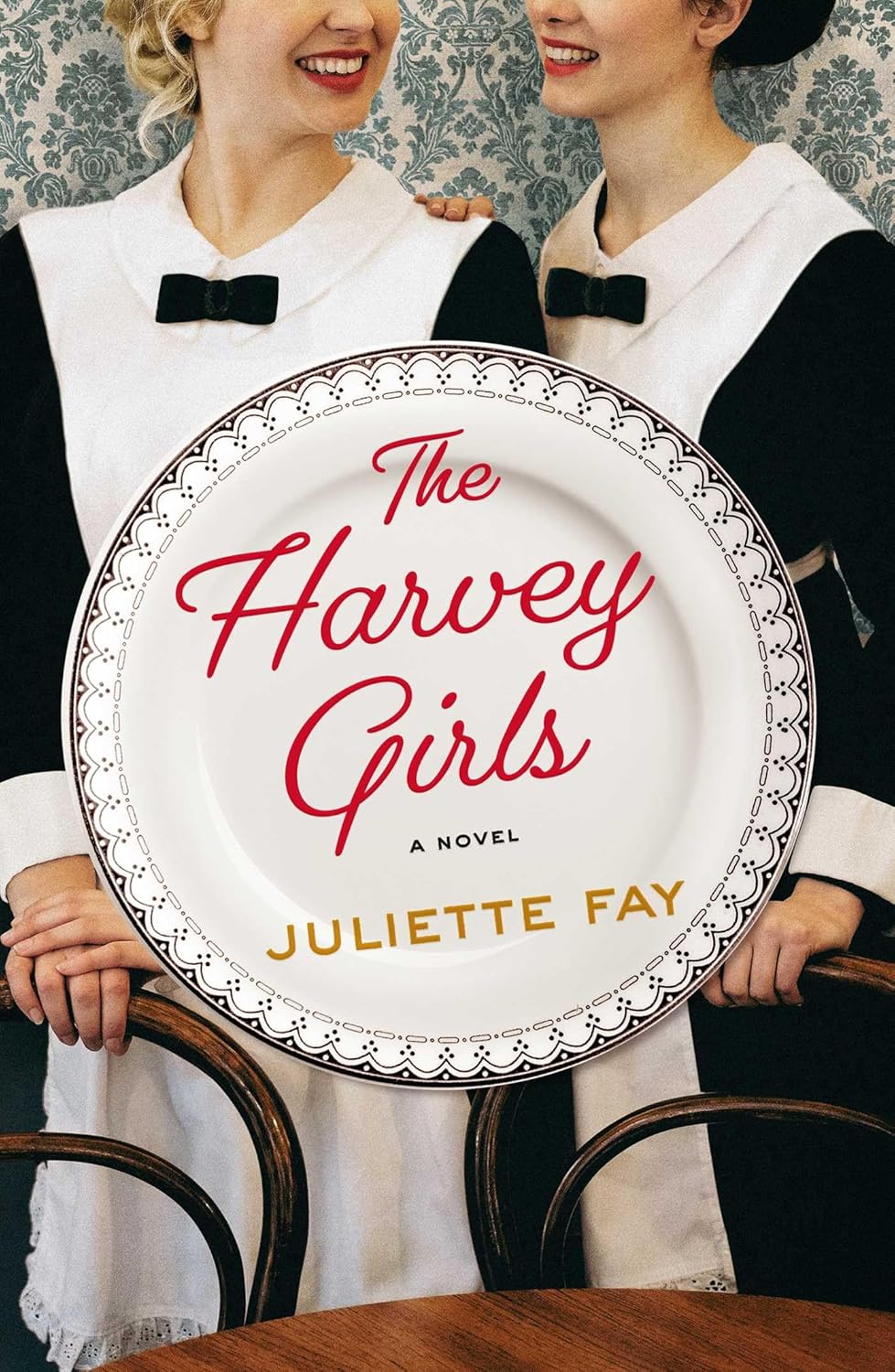
Charlotte and Billie come from very different backgrounds but form a complicated bond. What inspired their particular character arcs?
Reading so many interviews with real Harvey Girls, I was most struck by two types: those who were running away from something like Charlotte, and those who didn’t want to go at all, but their families were desperate for income like Billie. I wanted them to be as different as possible; thus Charlotte had been rich and college educated, and Billie was poor with just a sixth-grade education. And I wanted them to need each other despite disliking each other, so I gave them both a secret fireable offense.
Have you ever visited a Harvey House location or any of the restored hotels and restaurants? How did those visits inform your writing?
I’ve spent a lot of time at El Tovar at the Grand Canyon where most of the novel takes place. I even splurged on a night in the fancy El Tovar suite with a balcony overlooking the canyon. (I had to! It was research!) I’ve had dinner and explored La Posada in Winslow, Arizona, and poked around the Fray Marcos at the William, AZ, depot and the Casa del Desierto in Barstow, CA. Unfortunately, most Harvey Houses have been demolished since their heydays but a few wonderful examples remain. It was great fun to imagine Harvey Girls sailing around with plates in their arms.
The novel includes historical events like a run-in with the KKK and critiques of taking over indigenous lands. What was important to you in showing the darker side of this historical moment?
I wanted to provide a rich picture of what the times were like, and it certainly wasn’t all Judy Garland singing “On the Atchison, Topeka, and the Santa Fe” like in the 1946 musical The Harvey Girls. It was especially important to talk about the land grab and horrific treatment of the tribes in the name of “saving” the Grand Canyon. I didn’t feel I could tell the story without including that thread.
What kind of research did you do to portray the world of the Harvey Girls accurately?
I read everything I could get my hands on. Two particularly great resources were The Harvey Girls: Women Who Opened the Westby Lesley Poling-Kempes and Appetite for America: Fred Harvey and the Business of Civilizing the Wild West–One Meal at a Time by Stephen Fried. Both are great reads! And I went to Harvey Houses that are still in existence to absorb as much as I could about what it would have felt like for the girls.
What surprised you most during your research on Fred Harvey’s hospitality empire or life on the railroad?
I was immensely impressed by how Fred Harvey hired, treated, and promoted women. At the time, a woman’s best options for employment were jobs like nurse, secretary, or teacher. Domestic or factory work was for the lower classes. Restaurant service was only a few rungs up the ladder from prostitution. If you owned a respectable restaurant, you had waiters, not waitresses.
The problem was that Fred’s waiters tended, as one of his managers put it, to “get likkered up and go on tears.” At his wits end, this manager suggested they hire women, and Fred agreed but with one stipulation. They would not be waitresses; they would be Harvey Girls.
He dealt with the respectability issue by instituting puritanical rules. They wore uniforms about as alluring as a nun’s habit and had to comport themselves with utmost propriety or risk immediate termination. Ironically, in addition to all these rules he also gave them unprecedented freedom. Harvey Girls were better paid than women in almost any other profession. They got generous vacation timeduring which they could ride the trains and stay at other Harvey Houses for free. It was an amazing adventure for girls who’d never been more than a few miles from home.
Opportunity for advancement was also remarkable. Fred was so committed to his high standards and didn’t trust that people got good training anywhere else, so he much preferred to hire from within. His head of personnel, Alice Steele, and chief architect, Mary Colter, were two of the highest-ranking women in corporate America at the time, and both worked for the same company!
Why did you choose the Grand Canyon, specifically the El Tovar Hotel, as the final destination for Charlotte and Billie?
I chose the Grand Canyon because of its gorgeous setting and close-knit Harvey community. Also my sister lives in nearby Flagstaff, so it was easy for me to visit her and then pop up to do research.
Do you have a favourite quote or scene from The Harvey Girls that you find yourself going back to?
Here’s a scene I love. In my research, I learned that washing oyster shells was a prank they would play on the new girls, especially those from the Midwest who had no experience with oysters. An older Harvey Girl named Phyllis has just set it up for Billie, who’s from Nebraska. Charlotte, who’s from Boston and had been wealthy enough to eat good seafood, understands right away that it’s a prank.
Billie got her coat, filled the heavy bucket with hot water and dish soap, and headed out behind the restaurant, where Phyllis had, as promised, laid out all the supplies. She dragged over an old crate to sit on and began the bitter task of washing, rinsing, and drying each sharp shell and depositing it into a clean bowl. Inside of fifteen minutes her hands were red and chapped from the dishwater, with several small nicks from the jagged oyster serving dishes. Why did they have to be served in something with such sharp edges, anyway? Why couldn’t they use those dainty little butter-pat bowls? They were the perfect size and so much prettier.
Suddenly the back door of the kitchen flew open. “Did you take my stockings?” Charlotte demanded.
“No, of course not. Why would I take—”
“And what are you doing out here anyway?”
“As you can easily see if you’d bother to look, I’m washing the oyster shells.”
“What on earth for?”
“Because they have to be washed! We can’t serve oysters in dirty shells, now can we?”
Charlotte suddenly burst out laughing. It was an odd thing to see that somber face go wide with hilarity. For a moment Billie wondered if the woman had gone mad.
“You don’t reuse oyster shells!” Charlotte chortled. “The oysters grow inside them. It would be like . . . like reusing potato skins!” And she fell into another fit of laughter.
Billie’s hands had begun to throb and stiffen in the cold, but they were still limber enough to squeeze Charlotte’s neck, which was exactly what she wanted to do. “WELL, WHY DID PHYLLIS—”
Then it dawned on her, and she looked up just in time to see four or five girls retreat from the windows of the dorm above. But not Phyllis. She just stood there and waved.
“You can’t let her get to you.” It was a man’s voice. Billie turned to see Leif in the doorway. “They do this with all the new girls.”
“Then why didn’t they do it to her?” Billie pointed at the still-chuckling Charlotte.
“Because she already knew about oysters. It wouldn’t have worked.” He picked up the heavy bucket. “You go on inside and get warm. I’ll clean this up. But, Billie, don’t show that you’re upset. That just makes it more fun for them.”
“He’s right,” said Charlotte, attempting—unsuccessfully—to stifle a grin.
“Don’t you dare speak to me!”
Billie picked up the bucket of clean shells and trudged upstairs. Phyllis’s room was the first one on the left and it was empty. Billie pulled back the bedsheets and spread the shells evenly from the pillow to the foot of the bed, flipped the sheets back over them, and smoothed the quilt. “Sleep tight,” she murmured and headed for the bath.
Is there anything else you would like to add?
I’ll just mention that readers who’ve read my two previous historical novels will recognize brief appearances by Gert and Winnie Turner in this novel. The story of their meteoric rise as vaudeville acrobats is told in The Tumbling Turner Sisters. Gert then goes to Hollywood and is a character in City of Flickering Light, where her marriage to co-star Henry Weston is not all it seems … The books aren’t quite sequels, they stand alone and can be read separately, but they do progress through time, and my publisher is calling it a trilogy.
Thank you so much for taking the time to chat with me and share with my readers.
Thank you for interviewing me and inviting your readers into the world of The Harvey Girls!
I hope you will check out The Harvey Girls on Goodreads and read my review on the blog.
Many thanks to Gallery Books, Simon & Schuster, for connecting me with the author and giving me a chance to highlight this book on my blog in exchange for an honest review. 🙂
Thank you for reading the interview! 🙂 See you tomorrow!

Be First to Comment